
Fiber Optic or Radio Link: How to Choose the Right Technology to Connect Your Sites
The decision depends on distance, available line of sight, installation urgency, and how critical continuous connectivity is between your sites.
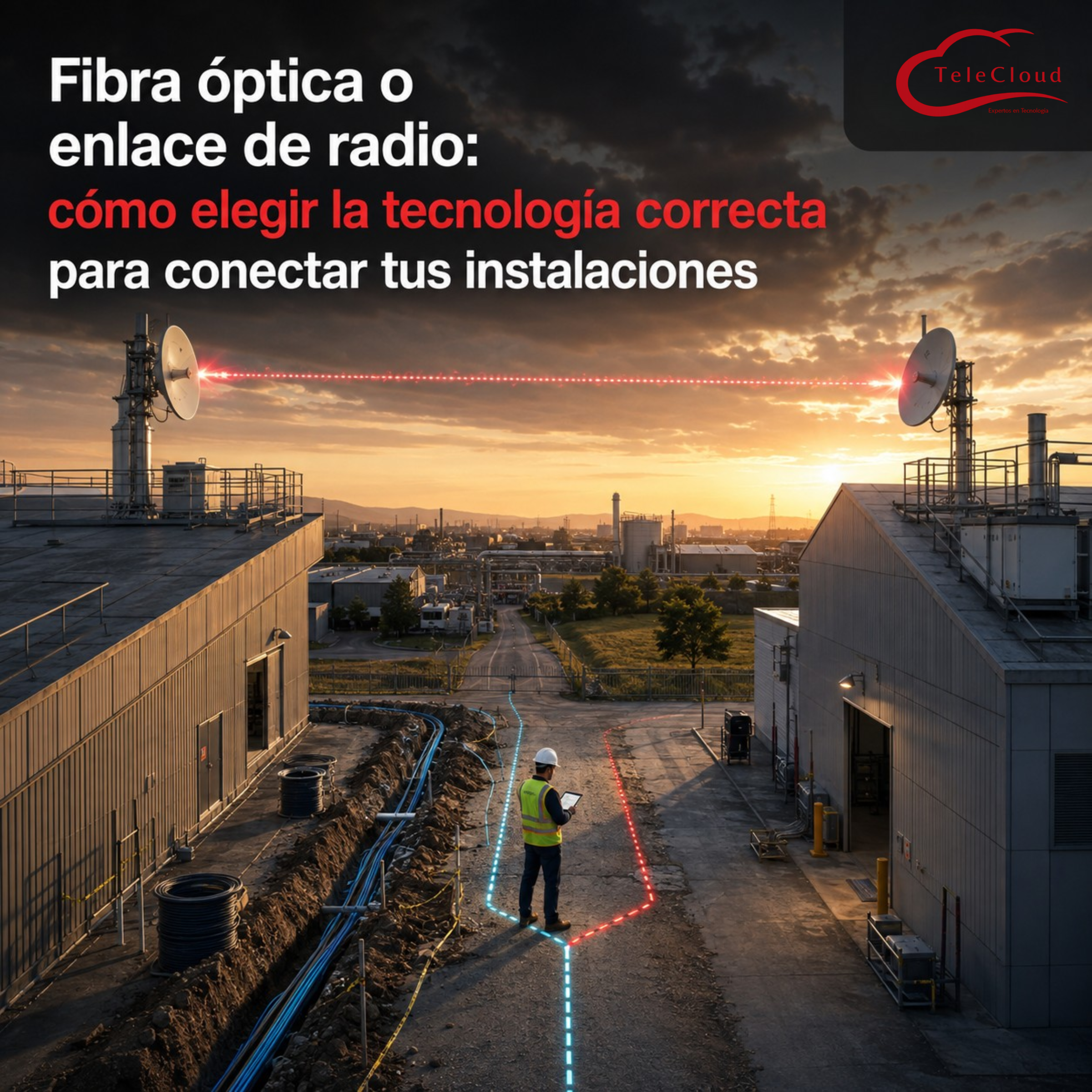
The new warehouse opened three months ago, fifteen kilometers from the main plant. The project chose a radio link because it promised installation in days, not weeks. Everything worked fine until the first heavy rain season: the signal started degrading, the ERP stopped syncing inventory between both locations in real time, and the logistics team went back to cross-checking manual counts over WhatsApp to avoid losing visibility of stock.
Why Installation Speed Shouldn't Be the Only Criterion
A radio link installs faster than fiber optic because it requires no civil works or trenching permits. That speed is real, and in some scenarios it's the right call, but when it's chosen for speed alone, without evaluating the site's specific conditions, a company can end up with a connection vulnerable to factors it doesn't control.
What a Radio Link Needs to Work Reliably
A radio link depends on direct line of sight between both points and relatively stable weather conditions. Heavy rain, dense fog, or new construction blocking the line of sight can degrade or interrupt the signal, even on links installed correctly from the start.
What a Company Gains With Fiber Optic
Fiber optic doesn't depend on weather or line of sight, and it sustains higher bandwidth with lower latency, which matters when multiple sites share the same ERP, WMS, or real-time video surveillance system. Installation cost is higher, but connection stability is significantly greater.
How to Decide Based on Your Company's Real Operation
When a Radio Link Is the Right Choice
When distance and terrain allow it, when there's genuine urgency for connectivity, and when the operation between sites can tolerate occasional service variation, a radio link offers a fast solution with lower upfront investment.
When Fiber Optic Is the Right Investment
When multiple sites depend on constant synchronization of critical data, when distance or obstacles don't allow reliable line of sight, or when the company can't tolerate frequent interruptions, fiber optic is the technology that sustains that demand.
Why It Pays to Evaluate Both Technologies With a Real Site Assessment
The right decision rarely comes from comparing spec sheets. It depends on a real survey of the conditions between both points: exact distance, physical obstacles, the area's weather exposure, and how critical the systems that will depend on that connection are. At TeleCloud we evaluate WAN networks and connectivity between sites based on the real conditions of each pair of your company's locations, not on a generic recommendation.
Frequently asked questions
Can fiber optic and radio link be combined in the same company?
Yes. Many companies use fiber for their most data-critical sites and a radio link for secondary or backup connections, depending on each site's budget and urgency.
How long does fiber optic installation between two sites take?
It depends on the distance and whether it requires new civil works or can use existing infrastructure, which is why it's worth quoting with a real route survey before committing to dates.
Can a radio link serve as backup for a fiber connection?
Yes, it's a common setup: fiber sustains the main operation and the radio link steps in as backup if the primary connection is interrupted.
Do you need a network diagnosis?
The TeleCloud team evaluates your current infrastructure and proposes solutions adapted to your industrial operation.
Schedule free diagnosis